Canine osteoarthritis is the most common degenerative disease in dogs, and its incidence grows as their lifespan increases which, thanks to modern medicine, is ever longer. However, there are ways to prevent its early onset, and to do so it is necessary to be aware of the symptoms and the care it requires.
Caring for your dog starts from day one. If you have a puppy, take a look at our basic care for a newborn dog.
What is canine osteoarthritis?
Osteoarthritis is a chronic degenerative disease that affects the patient's skeletal system. Most commonly it occurs in the joints of the limbs (the knees, carpus, elbows, hip and shoulder) and also in the spine.
This disease causes a degeneration of the cartilage, which is necessary for the proper mobility of the joints and, as in people, extreme temperatures (heat and cold) increase the pain it produces.
When does osteoarthritis appear in dogs?
Osteoarthritis can appear in dogs of any age, although it is more common from the age of 7 in large breeds and 10 in small breeds. The factors that accelerate its onset include being overweight, a sedentary lifestyle and genetic predisposition.
However, we must not make the mistake of thinking that it is a problem exclusive to old age. In young dogs, osteoarthritis is usually secondary to developmental disorders, such as hip or elbow dysplasia. When a joint does not fit together perfectly from the time of growth, the continuous friction causes premature wear of the cartilage, leading to osteoarthritis at a very early age. Keeping your dog's weight under control from puppyhood is the most effective preventive measure to delay its onset.
Which dogs are most prone to suffering from osteoarthritis?
Any breed of dog can develop osteoarthritis, and this possibility increases as our canine gets older. However, large dogs are more likely to develop osteoarthritis much sooner (and more frequently) than a small-breed dog.
Another important factor is the dog being overweight. The bones are responsible for movement and for supporting the weight of the body, and when the body is overweight the effort required is greater and causes faster wear.
Finally, there is also the genetic factor, since osteoarthritis is hereditary. If your dog has siblings or parents that suffer from osteoarthritis, then it is more likely to develop it as well if the required care is not taken.
What are the symptoms of canine osteoarthritis?
The first symptom that osteoarthritis produces is discomfort in the affected area, but this is imperceptible to the dog's owners until it becomes so advanced that it begins to be truly painful for the dog. This threshold is different in each dog, as each one has a different tolerance to pain.
However, when this pain increases it turns into other symptoms that are more noticeable to us. Among them are:
-
Limping
-
Lethargy and apathy
-
Reluctance or refusal to move
-
Clear signs of pain when touched
-
Defensive aggression when you try to touch the sore area
Diagnosing osteoarthritis in dogs
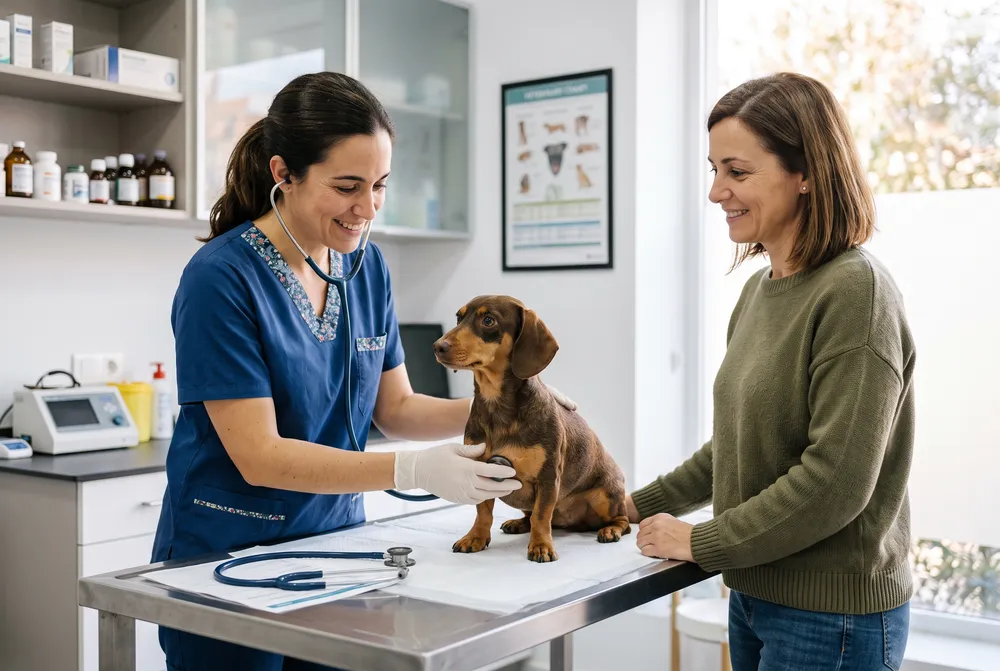
The diagnosis is confirmed through a physical examination and X-rays. At Clínica Veterinaria Somo we have diagnostic imaging equipment to detect osteoarthritis with precision.
During the consultation, the vet will assess the joints' range of motion, look for signs of muscle atrophy and specific pain points. X-rays allow us to visualise the narrowing of the joint space and the presence of osteophytes (small bony growths). In complex cases, we may turn to complementary tests to rule out other neurological conditions that can mimic the symptoms of osteoarthritis.
How is canine osteoarthritis treated?
Osteoarthritis is a disease that cannot be completely cured, but with the right treatment the inflammation and pain will begin to decrease and the affected area will then periodically recover its mobility. Progress can be very satisfying, but it requires ongoing care.
To begin with, the vet will use painkillers and anti-inflammatories to reduce the damage in the area affected by arthritis. Then, if your dog is overweight, a diet will be prescribed that contains the nutrients it needs to strengthen its bones and the appropriate portions for its body.
Finally, your vet may advise carrying out moderate physical activity (such as gentle walks) to strengthen your dog's body. You can also choose to include it in physiotherapy or swimming, as both help to strengthen the body and its movement without putting impact on its bones.
Exercise and physiotherapy: the importance of controlled movement
Contrary to what one might think, a dog with osteoarthritis should not stop moving; in fact, complete rest is counterproductive as it weakens the muscles that support the joints. The aim is to carry out low-impact exercise of controlled duration. Short walks on flat ground, several times a day, are much better than one long, exhausting walk. Swimming or hydrotherapy are excellent options, as they allow the muscles to be strengthened without the joints having to bear the animal's weight.
In addition to walks, you can do small rehabilitation exercises at home, such as gentle massages on the affected areas or passive stretches, always guided by a professional. At Clínica Veterinaria Somo we help you design a personalised mobility routine to prevent muscle atrophy and ensure that your companion's joints stay as functional as possible for as long as possible.
How can canine osteoarthritis be prevented?
To prevent the onset of osteoarthritis in your dog, the care it requires is similar to the physical and dietary treatment it would receive if it suffered from it. To begin with, it is necessary to look after its diet and control its weight with the vet to make sure it gets all the nutrients it needs in its daily food, and that the amount it eats each day is neither too much nor too little.
By controlling its weight you can prevent the premature wear of the cartilage, but it is also necessary to reinforce it with daily exercise. However, this must be low-demand and low-impact on its joints, such as gentle walks, otherwise we will be overworking them and wearing them down all the same.
Another factor that leads to the onset of osteoarthritis is injuries involving your dog's bones. For this reason, with any knock that you think may have impacted them, it is important to go to the vet so they can check the severity of the injury and whether or not it requires treatment for it.

“Osteoarthritis has no cure, but there's plenty of room for improvement: with the right management your dog can move and enjoy life without pain.”
What is the life expectancy of a dog with osteoarthritis?
With the right treatment and continuous veterinary supervision, a dog with osteoarthritis can enjoy a very acceptable quality of life for many years. The key lies in early diagnosis and pain management.
It is important to understand that osteoarthritis is not a fatal disease in itself, but it can compromise the animal's life if the pain prevents it from moving or carrying out its basic needs. A comprehensive approach that combines medication, a specific diet and moderate exercise (or physiotherapy) allows most diagnosed dogs to reach their natural life expectancy with dignified and happy mobility.
Assess each case with your vet; the right treatment depends on each animal's age, weight, health status and history.
Which supplements help a dog with osteoarthritis?
In addition to weight control and exercise, chondroprotectors are one of the most widely used aids to accompany the treatment of canine osteoarthritis. These are supplements designed to nourish and protect the joint cartilage, helping to slow its wear and improve the animal's comfort. They do not replace veterinary treatment but complement it, and their use should always be assessed according to the vet's recommendation for each specific case.
Among the most common supplements are glucosamine and chondroitin, which tend to be used together because they are considered components that help maintain the quality of the cartilage and of the synovial fluid that lubricates the joint. Omega-3 fatty acids are also very common, present for example in fish oils, and are generally credited with a supporting effect against joint inflammation.
It is worth bearing in mind that these supplements usually act gradually, so their effects are not immediate and require consistency over several weeks. The choice of product, how it is given and how it combines with other measures depend on the veterinary assessment, since every dog has a different weight, age and joint condition. At Clínica Veterinaria Somo we guide you on which type of nutritional support best fits your pet's treatment plan.
Low-impact exercise and hydrotherapy: practical examples
Exercise is a cornerstone of managing osteoarthritis, but the key is that it should be low-impact and measured. Instead of one long, exhausting walk, it is usually preferable to spread the movement across several short, gentle walks throughout the day, ideally on flat, soft ground (grass or earth) rather than hard tarmac, avoiding sudden running, jumping or abrupt changes of direction.
Swimming and hydrotherapy are excellent examples of low-impact activity: the water supports the body's weight and allows the dog to move and strengthen its muscles without the joints bearing the full load. When done in a guided way, for instance on underwater treadmills, the work can be graded according to each animal's tolerance.
As a complement, a physiotherapist or the vet themselves may prescribe simple rehabilitation exercises tailored to the dog: gentle massages of the muscles, passive movements of the joints or small controlled routes that stimulate mobility. All these guidelines should be adapted to each case and supervised, because too much exercise can be as harmful as too little. The idea is to keep the dog active and with good muscle mass, without straining the damaged joints.
Caring for the senior dog with osteoarthritis
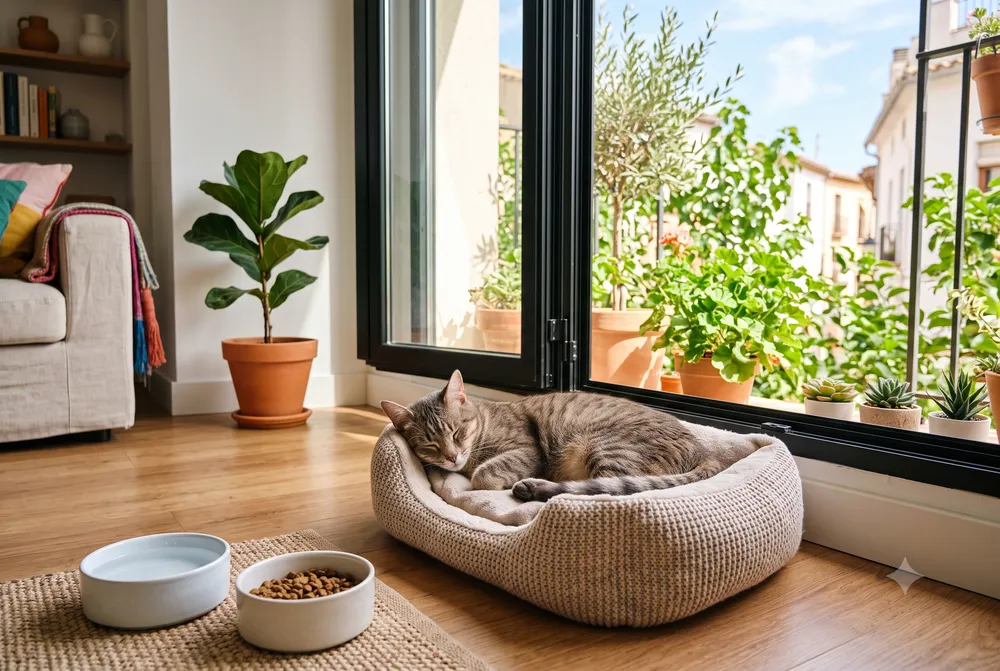
Older dogs with osteoarthritis appreciate small adaptations at home that reduce the strain on their joints and prevent falls. One of the most useful items is an orthopaedic bed, with firm padding that distributes the weight and insulates against the cold and damp of the floor, factors that tend to increase joint discomfort.
The accessibility of the home also makes a big difference. Ramps to get into the car, onto the sofa or the bed avoid jumping, which is especially damaging for a worn joint. Placing rugs or non-slip mats over slippery floors helps the dog to find secure footing, and raising the food and water bowls to a comfortable height reduces the strain on the neck and limbs when eating and drinking.
Weight control remains decisive in the older dog: every extra kilo means a direct overload on already fragile joints, so maintaining an appropriate body condition, according to the vet's guidance, is one of the most effective measures for its wellbeing. To this we can add keeping the dog warm in the cold months, keeping its nails well trimmed for a correct gait, and a routine of gentle but consistent walks. Together, this care helps the senior dog maintain its independence and a good quality of life.
Is there a cure for canine osteoarthritis? Realistic expectations
It is best to be clear: osteoarthritis is a chronic and degenerative disease, which means there is no definitive cure. The joint cartilage that has worn away does not fully regenerate, so the goal of treatment is not to eliminate the disease but to control it and slow its progression as far as possible.
The good news is that appropriate management allows most dogs to live comfortably with their osteoarthritis for a long time. By combining weight control, low-impact exercise, physiotherapy, supplements and the pain treatment indicated by the vet, it is usually possible to reduce the discomfort and maintain mobility. The real purpose is to preserve the animal's quality of life: that it can move, rest and enjoy its day-to-day life without pain.
This is why early diagnosis and continuous monitoring are so important. The sooner osteoarthritis is detected, the sooner the measures that slow its progression can be put in place. Be wary of any product or method that promises a total cure; the realistic and honest approach is to set out a sustained control plan over time, reviewed periodically by your vet and adjusted to how each dog progresses.
Frequently asked questions about osteoarthritis in dogs
What is the best medication for dogs with osteoarthritis?
There is no single universal medication. The usual treatment combines NSAIDs (non-steroidal anti-inflammatory drugs) for pain, supplements such as omega-3, chondroitin and glucosamine, and in advanced cases treatments such as intra-articular hyaluronic acid. Always under veterinary prescription.
Is there a cure for osteoarthritis in dogs?
Osteoarthritis is a chronic degenerative disease with no definitive cure, but with the right treatment its progression can be slowed, the pain controlled and a good quality of life maintained for years.
At what age does osteoarthritis appear in dogs?
It can appear at any age, but it is more common from the age of 7 in large breeds and 10 in small breeds. In young dogs it is usually secondary to hip or elbow dysplasia.
How do I know if my dog has osteoarthritis?
The first signs are stiffness when getting up, limping, refusal to exercise and behavioural changes due to pain. With these symptoms, the vet will carry out an examination and X-rays to confirm the diagnosis.
Your dog's osteoarthritis can progress unnoticed; keep it in check with our specialists at Clínica Veterinaria Somo
The onset and progression of osteoarthritis in dogs can go unnoticed by the naked eye. Often dogs take a knock and we do not notice it, or they acquire it through genetic inheritance and it is imperceptible until it is advanced. Visit our Clínica Veterinaria Somo in Cantabria together with your dog, and we will help you keep this disease under control in your furry friend.