Taking your dog to the snow is an incredible experience, but it requires preparation. Here are the 9 key tips the vet recommends so your dog can enjoy it safely.
🗓️ Before travelling, book an appointment to check your dog's health: [button href=»/en/contacto/»] Request a Veterinary Check-up [/button]
📋 The 9 essential tips at a glance:
-
🏥 1. Preventive veterinary visit before the trip
-
🧥 2. Warm clothing and suitable paw protection
-
🚫 3. Prevent it from eating snow (Chemical risk)
-
🧻 4. Do not let it lick its paw pads
-
🐾 5. Apply a specific paw-pad protector
-
☀️ 6. Mandatory sun protection on the muzzle and nose
-
🥩 7. Water and calorie-rich snacks for the journey
-
📍 8. Keep the microchip and ID tag in order
-
🧼 9. Thorough drying and inspection when you get back home
1. Take it to the vet before travelling
Before going on a trip it is always advisable to visit the vet and check that your furry friend is in good health. But when you are going on a trip together to a place with such low temperatures, the visit becomes almost mandatory, especially if your dog is not used to mountain weather or has never before been exposed to icy environments.
2. Get the right clothing and accessories for your dog
During the clinical check-up, you can ask the vet whether they think it is necessary to get a waterproof coat and special footwear for your dog. The need for textile protection will depend directly on its breed, its size, its age, its general state of health and also on the prior toughness of its paw pads.
3. Do not let it eat snow
This tip may seem trivial, but it carries enormous medical seriousness. In areas where snowfall is constant or where a lot of ice builds up on the roads, the surface is treated with harmful chemicals such as antifreeze or industrial salt, which are highly toxic to your furry friend. In addition, you must be extremely careful since antifreeze has a sweet smell that is very attractive to many dogs' sense of smell; if yours is curious, it will try to ingest it.
Unfortunately, antifreeze poisoning is a very common emergency in dogs. You must watch that it does not lick the snow and be alert to immediate clinical symptoms such as lethargy, tremors, seizures, vomiting, acute abdominal pain or an excessive increase in thirst and urination. At the first sign of any of these, your pet will need immediate emergency veterinary care.
4. Do not let it lick its paws
For reasons very similar to the previous point, you should not allow your dog to lick its paws during the walk in the mountains or immediately afterwards. Residues of salt and de-icing chemicals invisibly accumulate on its limbs, and it could be seriously poisoned through oral contact. It is highly recommended to always carry a clean towel and rub its paws every so often during the walk to remove excess residue and ice crystals.
5. Get a protector for its paw pads
Your little dog's paw pads are the anatomical area that will have the most contact and friction with the icy ground. This means they are one of the main channels through which extreme cold and moisture penetrate its body system, in addition to suffering cracks and frostbite burns. To care for it, you can use closed footwear or dog boots; if it does not adapt to them, applying a paw-pad protector for dogs in wax or protective ointment form before leaving home will effectively reinforce and insulate the pad skin.
6. Protect it from the sun with sunscreen
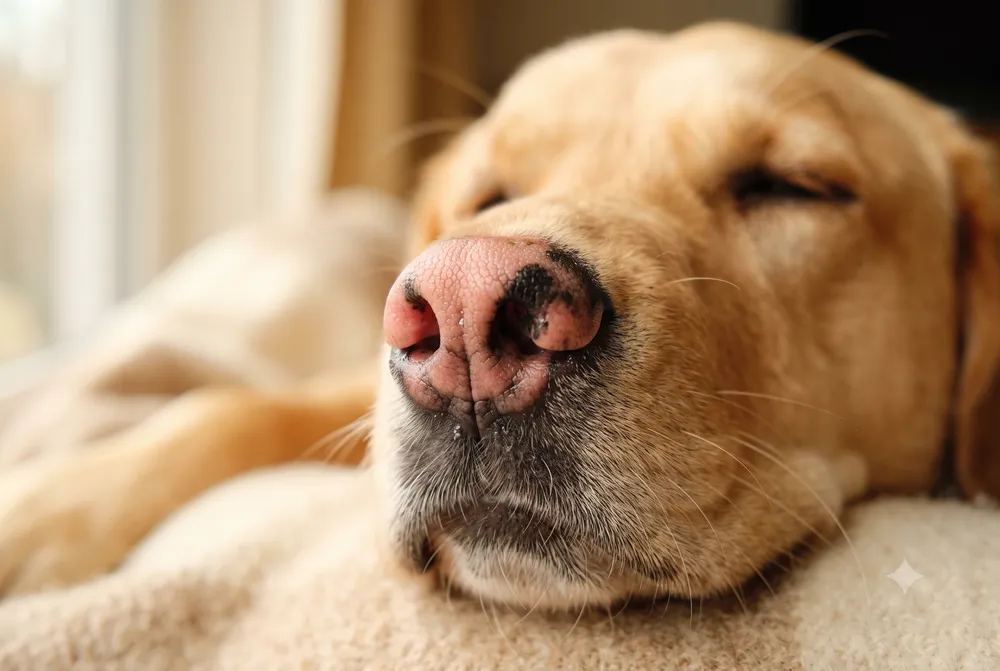
The reflection of solar radiation and ultraviolet (UV) rays off the white surface of the snow produces an amplified screen effect that can cause serious burns to both your skin and your dog's. For this reason, it is essential to apply a veterinary sunscreen to the areas without dense fur, paying special attention to the muzzle, the nose and the ears.

“Snow is fun, but also cold and risk. With a few simple precautions, your dog can enjoy it safely.”
7. Bring water and calorie-rich food for it
Running, playing and moving across the blanket of snow involves exhausting physical effort that your furry friend will love but that will burn through its metabolic reserves very quickly. Always carry a portable water bowl with room-temperature water to prevent it from becoming dehydrated, along with snacks or high-energy treats that allow it to immediately renew its strength during the journey.
8. Never let it out of your sight
Snow completely alters the scent signals of the environment, which can disorient your pet if it wanders too far. Preferably, you should use a long extendable leash to walk it safely. If you let it off the leash in authorised areas, make sure its mandatory identification microchip is perfectly registered and that it has a collar with an engraved tag bearing your current contact details. Putting a high-visibility coat or one with reflective strips on it will help you keep track of it visually if fog rolls in or the afternoon light fades quickly.
9. Dry and clean it very well when you get home
This is the last preventive tip, but one of the most important for its health. When you return from the trip, it is mandatory to dry your dog thoroughly with an absorbent towel to completely remove the moisture accumulated in its coat, paying attention to its abdomen and paws, thus preventing it from suffering hypothermia.
Afterwards, carefully examine its paw pads and the spaces between its toes: it is very common to find small pieces of compacted ice or salt crystals that cause painful lacerations and infections. If you detect open wounds or frostbite burns, you must see a medical professional immediately.
What do I need to bring if I'm going to the snow with my dog? Travel checklist
Preparing your pet's bag is essential to safely face the low temperatures. Make sure to include this compact checklist before heading out to the mountains:
-
🧴 Paw-pad protector: A durable wax or balm to insulate its paws from the ice.
-
🧥 Waterproof coat and boots: Especially mandatory for puppies, elderly dogs or short-haired ones.
-
💧 Portable water bottle: To prevent it from drinking frozen water off the surface.
-
🧻 Absorbent towel: Essential for drying its limbs midway through and at the end of the walk.
-
🥩 High-energy snacks: Calorie-rich treats to replenish the strength lost to the cold.
-
🦺 Leash and collar with tag: To keep it under control in low-visibility areas.
-
🆔 Documentation and chip: An up-to-date health record with its mandatory identification.
Let us prepare your dog for its trip at Clínica Veterinaria SOMO
We want you and your faithful friend to enjoy your winter getaway to the fullest and with complete peace of mind. At Clínica Veterinaria Somo in Cantabria we maintain a firm commitment to preventive medicine.
We invite you to come to our clinic for a complete check-up of your furry friend's health before travelling, to certify that its vaccinations are up to date and to help you design the best protection plan so that your snow experience is an absolute success. Visit us at Calle Isla de Mouro 7, Somo, or book your appointment by calling directly on 942 51 00 66.
Frequently asked questions about taking your dog to the snow
Why should I not let my dog eat snow?
Because in snowy areas the roads are often treated with antifreeze and industrial salt, which are highly toxic to dogs. Antifreeze has a sweet smell that is very attractive, and poisoning is a frequent emergency. Watch for symptoms such as lethargy, tremors, seizures, vomiting, abdominal pain or increased thirst and urination, and seek emergency veterinary care.
How can I protect my dog's paw pads in the snow?
The pads have the most contact with the icy ground and suffer cracks and frostbite burns. You can use closed footwear or dog boots and, if your dog does not adapt, apply a paw-pad protector in wax or ointment form before going out. Carry a towel to rub and dry its paws during and after the walk.
What should I do with my dog after a snow trip?
Dry it thoroughly with an absorbent towel, paying attention to the abdomen and paws, to prevent hypothermia. Then examine its pads and the spaces between its toes for compacted ice or salt crystals; if you detect open wounds or frostbite burns, see the vet immediately.