Cat vaccines are one of the most effective tools for protecting your feline's health against serious and, in many cases, fatal diseases. Whether your cat lives exclusively indoors or has access to the outdoors, a well-planned vaccination schedule helps it develop defences against viruses and bacteria circulating in the environment. Let's look at which vaccines your cat needs, how they are organised by age and why prevention is always the best investment in its wellbeing.
Why is it important to vaccinate your cat?
Vaccinating means exposing your cat's immune system to a harmless version of an infectious agent so that it learns how to defend itself against it. That way, if it comes into contact with the real virus or bacteria in the future, its body already knows how to react and the disease is either avoided or appears in a much milder form.
Many of the diseases we prevent through vaccination have no specific curative treatment, so the only real protection is preventive. In addition, some feline conditions share symptoms with other health problems; if you notice your cat is listless or showing signs of discomfort, it is worth reviewing our guide on symptoms of a sick cat and seeing your vet.
Essential cat vaccines: the feline trivalent
The vaccine considered basic for practically all cats is the one known as the feline trivalent, because it protects against three highly contagious viral diseases. It is the cornerstone of any feline vaccination schedule, regardless of whether the cat leaves the house or not.
Feline panleukopenia
Panleukopenia, also called feline parvovirus, is a viral disease that is highly resistant in the environment and has a high mortality rate, especially in kittens. It causes vomiting, severe diarrhoea, dehydration and a marked drop in white blood cells. Early vaccination is key to preventing it.
Feline calicivirus
Calicivirus is one of the main causes of respiratory conditions and mouth ulcers in cats. It spreads easily between cats that live together or share spaces, and it can leave carriers that continue to spread it for a long time.
Feline rhinotracheitis (herpesvirus)
Rhinotracheitis, caused by the feline herpesvirus, produces sneezing, nasal and ocular discharge and, on occasion, conjunctivitis. As with calicivirus, many cats remain latent carriers and can relapse during times of stress.
Vaccines according to lifestyle
In addition to the trivalent, there are vaccines recommended depending on the risks to which each cat is exposed. Here it is especially important to distinguish between indoor and outdoor cats, something we always assess on an individual basis.
Feline leukaemia (FeLV)
Feline leukaemia is a viral disease that affects the immune system and can promote infections, anaemia and tumour processes. It is transmitted through close contact between cats (saliva, fights, sharing food bowls), so the vaccine is especially recommended for cats with access to the outdoors or that live with other cats. Before vaccinating, a test is usually carried out to determine the animal's status.
Rabies
The rabies vaccine prevents a fatal disease that is transmissible to humans. In cats, whether it is compulsory depends on the regulations of each autonomous community and it is essential for travelling outside Spain (passport). In Cantabria it is always advisable to confirm the current requirement with your vet. If you would like to learn more, we have an article dedicated to the causes, symptoms and prevention of rabies.
Feline vaccination schedule by age
The schedule begins in kittens when the antibodies they receive from the mother start to decline, and it is maintained with boosters throughout life. The following table is a guide: your vet will adapt the regimen and the products to your cat's specific case.
| Age | Vaccine | Booster |
|---|---|---|
| 8-9 weeks | First dose of feline trivalent | Yes, after 3-4 weeks |
| 12 weeks | Second dose of trivalent + feline leukaemia (FeLV) if applicable | According to the product regimen |
| From 12-16 weeks | Rabies (according to regional regulations or travel) | According to regulations |
| Annually | Booster of trivalent and, where applicable, FeLV and rabies | Annual check-up |
These ages may vary slightly. The important thing is not to skip doses or boosters, since an incomplete regimen leaves the cat unprotected at its most vulnerable stages.

“Vaccinating your cat protects them from diseases we still see and that, with a good schedule, we can prevent.”
Indoor cats versus outdoor cats
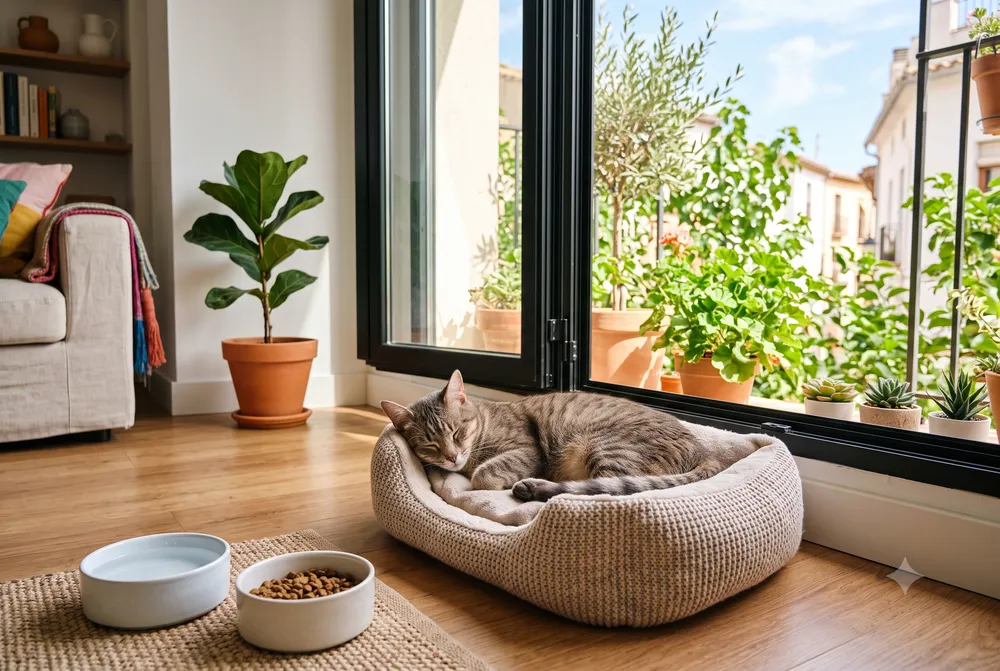
It is a common mistake to think that a cat that never leaves the house does not need vaccines. Although its risk of exposure is lower, viruses can enter the home on our clothes or shoes, through other animals or during an unexpected visit to the clinic. That is why the feline trivalent is also recommended for indoor cats.
On the other hand, vaccines such as the feline leukaemia vaccine make particular sense for cats with access to the outdoors, that hunt or that live with cats whose health status we do not know. Your vet will design a tailored plan according to your cat's real lifestyle.
Annual boosters and check-ups
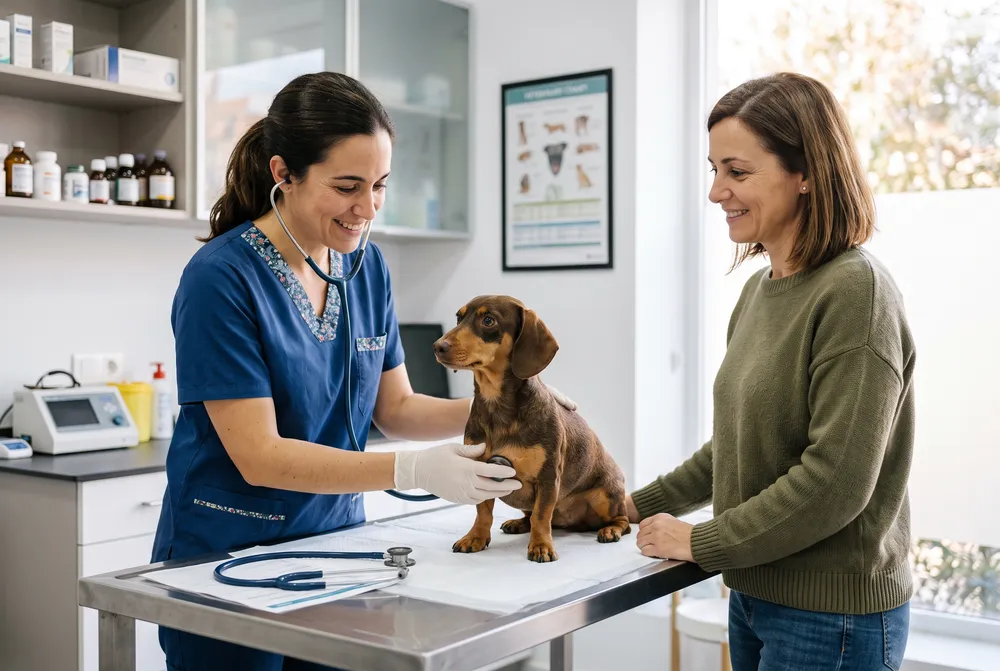
The protection provided by vaccines does not last a lifetime: it weakens over time. That is why periodic boosters are necessary, usually annually for several of them. The check-up that accompanies each vaccination is also an excellent opportunity to detect health problems early, monitor weight or keep an eye on conditions that are common in older cats, such as feline kidney disease.
Vaccination and deworming: the prevention duo
Vaccines protect against viruses and bacteria, but not against parasites. That is why vaccination should always go hand in hand with a good deworming plan, both internal and external. Before administering a vaccine, the cat should be dewormed, since an animal with a significant parasite burden may respond less well to immunisation.
You can consult our guide on internal deworming to understand why it is so important. And if you are organising all of your cat's preventive care, remember that neutering dogs and cats is also part of a healthier, more balanced life. By the way, if you also live with a dog, you will want to know which vaccines your dog needs, as its schedule is different.
The feline trivalent is recommended even for cats that never leave the house, and the cat should be dewormed before being vaccinated. Not skipping doses or boosters is what keeps your cat protected during its most vulnerable stages.
Frequently asked questions
Does the vaccine have side effects in cats?
Most cats tolerate vaccination very well. It is normal for them to be a little more listless for a day or two, or to have slight discomfort at the injection site. More serious reactions are rare; if you have any symptom that worries you, contact your vet.
Can I vaccinate a pregnant cat?
As a general rule, it is best to avoid vaccinating during pregnancy unless your vet expressly indicates otherwise. The ideal is to review and update the vaccination status before breeding, so that the mother passes good defences on to her kittens. Always consult your vet before making any decision.
And if my cat never leaves the house, does it need all the vaccines?
The feline trivalent is recommended even for cats that are exclusively indoors. Other vaccines, such as the feline leukaemia vaccine, are assessed according to their risk of exposure. It will be your vet who defines the most appropriate schedule for your cat's specific case.
Take care of your cat's health at Clínica Veterinaria Somo
At Clínica Veterinaria Somo, in Cantabria, we have a special dedication to the care of cats. We design personalised vaccination and deworming plans and, when needed, we have the support of our veterinary internal medicine unit for comprehensive monitoring of your feline's health.
If you would like to bring your cat's vaccines up to date or resolve any doubts about its care, book your appointment here or call us on 942 51 00 66. We will be delighted to help your cat enjoy a long and healthy life.