Hip dysplasia is a common disease that can affect a wide variety of dogs, causing, among other things, the well-known limping in the hind legs.
And, although not every dog goes on to develop it, it is important that you know what it is, whether it can affect your pet and how to prevent it. All of which you can read about below.
What is known as hip dysplasia?
Also known as coxofemoral dysplasia, it is an osteoarticular disease that causes difficulty in the formation of the joint of the same name.
This malformation in the coxofemoral joint (the hip joint) means that the head of the femur does not fit completely into the corresponding socket. This, in turn, causes pain and possible limping in the pet, because wear and tear is created in that joint.
Learn the symptoms of coxofemoral dysplasia
Coxofemoral dysplasia is a hereditary disease, whose development begins between 5 and 6 months of age. However, its symptoms do not usually appear until the dog is an adult, and they can not only alert you to the fact that your pet has this malformation, they can also affect its quality of life.
For this reason, it is very important to stay alert, especially if your canine companion has any of the risk factors for its appearance (which you can learn about in the following section). First, you should know the signs:
- Pain when palpating the area.
- Stiffness in the joints.
- Inactivity; your dog may show reluctance to run, play or climb stairs.
- Difficulty moving the hind legs and getting up.
- Swaying, as well as a «bunny hopping» gait with small jumps.
- Mood changes.
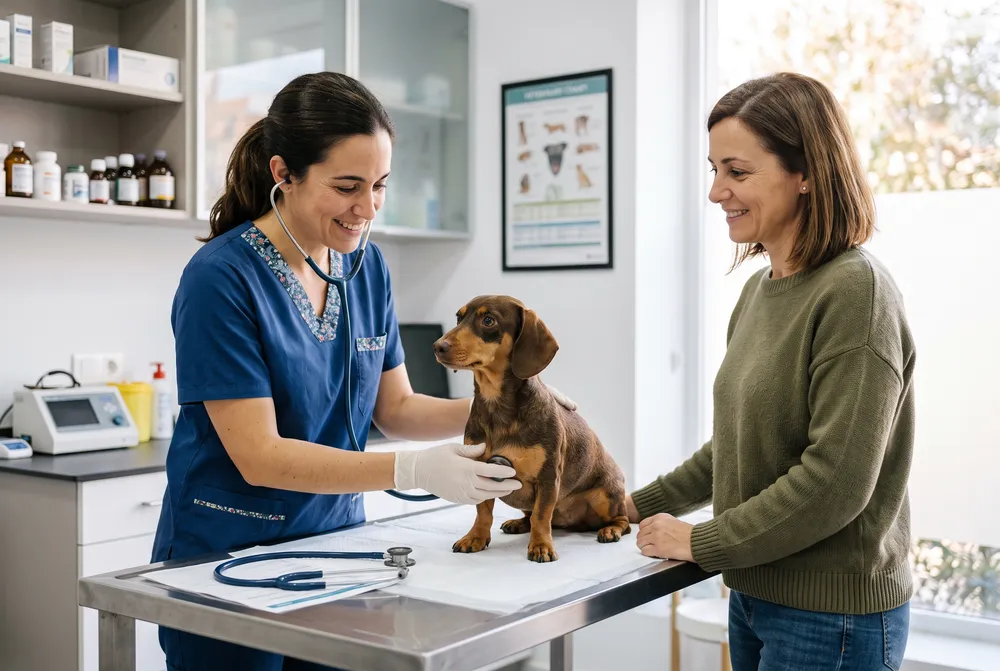
If any of these symptoms or other signs appear indicating that your pet is suffering due to hip dysplasia, it is essential to see the vet as soon as possible.
Diagnosing hip dysplasia in dogs: what tests are performed?
A definitive diagnosis of hip dysplasia in dogs cannot be based solely on observing the limp. The professional clinical process begins with a complete orthopaedic physical examination, both dynamic and static, in which the specialist assesses the range of motion and looks for the «Ortolani sign», a manoeuvre that reveals laxity in the hip joint. Afterwards, it is essential to carry out an imaging diagnostic study using X-rays under deep sedation. This makes it possible to place the patient in the standardised positions required by official assessment bodies, such as the conventional extended ventrodorsal position of the OFA (Orthopedic Foundation for Animals) or the PennHIP distraction method, which quantitatively measures the distraction index of the femoral head.
At Clínica Veterinaria Somo we have high-definition digital radiology equipment that allows us to obtain maximum-sharpness images immediately. Thanks to this technology, we accurately assess the congruence of the coxofemoral joint, measure the Norberg angle and detect the first signs of bone remodelling or secondary osteoarthritis. Establishing a precise score for the degree of dysplasia (from mild to severe) is the fundamental cornerstone for designing a tailored intervention protocol before irreversible structural damage appears.
What are the factors that influence the appearance of dysplasia?
Hip dysplasia, although a hereditary condition, also has other factors that influence its appearance. These can be defined in three groups:
Breeds with a greater predisposition to hip dysplasia
| Dog Breed | Predisposition and Impact Index |
|---|---|
| German Shepherd |
Very High Severe joint laxity and early development of osteoarthritis. |
| Rottweiler |
Very High Accelerated cartilage wear due to large muscle mass and high body weight. |
| Labrador Retriever |
High Closely linked to overweight problems and physical overload. |
| Golden Retriever |
High Common congenital subluxation of the femoral head. |
| Neapolitan Mastiff |
Very High Extreme joint overload due to giant, rapid growth. |
| Saint Bernard |
Very High Large size and high body weight that place intense strain on the hip. |
| Mastiff-type breeds (Dogo) |
High Heavy-set build that predisposes them to joint involvement. |
Experiencing rapid growth and obesity caused by nutrition
Inadequate feeding or nutrition based, above all, on high calories during the rearing period encourages rapid weight gain. And this, in turn, increases the stress that the hip experiences.
Likewise, obesity is a risk factor that you must keep in mind, since this condition places great strain on your pet's joints.
Doing inappropriate exercise
Growing puppies need a certain amount of physical activity and play that allows them to release energy, socialise and develop abilities such as coordination.
Thus, both too much exercise and a lack of it, mainly during bone growth, can result in the development of hip dysplasia.
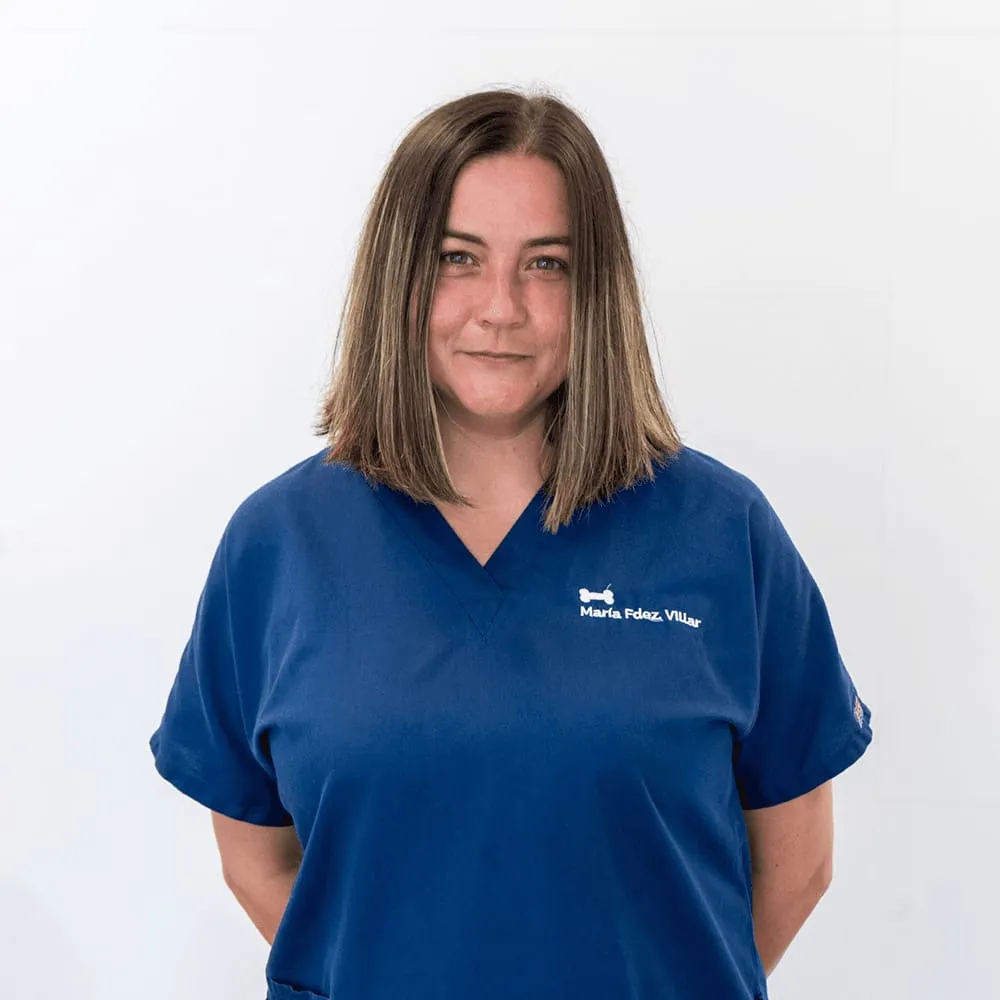
“Detecting dysplasia early, especially in large breeds, lets us slow its progression and protect your dog's mobility.”
Is it possible to prevent this osteoarticular disease?
Prevention is a fundamental point when it comes to this disease, with the risk factors you have already read about being the ones that guide this process.
Thus, one of the most important forms of prevention is considered to be not encouraging or allowing the breeding of dogs that have a predisposition to this disease or that show signs of it. This is due to its hereditary factor.
Providing proper feeding, both in quality and quantity, is also significant for preventing the obesity and excessive growth that can lead to dysplasia. In fact, there are special feeds for large and giant breeds, as well as for obese dogs.
In addition to this, you must prevent your pet from exercising abruptly or for prolonged periods if it is young. Exercise should be moderate so that it favours muscle development, providing joint stability, but without overloading the joint.
To complement all the above measures, there are regular visits to the vet. General check-ups not only make it possible to monitor your pet's growth and overall health; the condition of the joints should also be checked during them.
It is the specialist who, moreover, will recommend the best treatment for each patient suffering from dysplasia. Surgery in the area or specific medications may be necessary.
Surgical treatment of hip dysplasia
When medical management is not enough or we are dealing with severe malformations, surgical treatment is the ideal route to restore functionality to the pet. The main surgical options vary according to the animal's age and the degree of cartilage wear:
- Triple Pelvic Osteotomy (TPO): Indicated mainly in puppies and young dogs (5 to 12 months old) that present laxity but do not yet suffer from secondary osteoarthritis. It consists of making three surgical cuts in the pelvic bones to rotate the acetabulum, allowing the femoral head to fit optimally. Its prognosis is excellent, managing to halt joint degeneration, with an estimated recovery time of 6 to 8 weeks of controlled rest.
- Total Hip Replacement (THR): This is the definitive treatment of choice for adult dogs with severe osteoarthritis where the goal is to completely eliminate pain. It consists of replacing the natural joint with artificial implants (a titanium component for the femur and a polyethylene cup for the acetabulum). It offers an extraordinary long-term prognosis, allowing the dog to recover mobility identical to that of a healthy animal. Full recovery takes between 8 and 12 weeks.
- Femoral Head and Neck Resection (FHO): This is proposed as a salvage surgery for small or medium-sized dogs, or in cases where a prosthesis is not financially viable. The head of the femur is removed to eliminate direct bone-on-bone friction, encouraging the body itself to create a «false joint» of fibrous tissue. It requires immediate postoperative physiotherapy and its prognosis is very favourable in patients with a controlled weight.
Conservative treatment: physiotherapy, diet and supplements
For those patients in whom surgery is not indicated, conservative treatment is vital to slow the progression of the pathology and ease the pain. This comprehensive approach is based on three mandatory pillars: the administration of essential Omega-3 fatty acids (which act as powerful natural anti-inflammatories at the cellular level), strict control of a low-calorie diet to prevent overweight, and the daily use of medical-grade chondroprotectors with a high concentration of chondroitin and glucosamine to nourish the remaining joint cartilage.
Likewise, guided hydrotherapy sessions are ideal in this process, as they allow the animal to exercise and strengthen the pelvic muscles with low impact, preventing the joints from suffering under body weight. If you would like to learn how we design these personalised mobility plans, we invite you to consult our medical specialty of veterinary traumatology, where we assess each case on an individual basis.
Assess each case with your vet; the right treatment depends on each animal's age, weight, health status and history.
Conservative treatment and pain management: what it involves
When surgery is not indicated, or as support during many stages of the disease, conservative treatment aims to slow the progression of dysplasia and maintain the dog's wellbeing without surgical intervention. Its pillars are weight control (avoiding excess weight reduces the load on the hip), physiotherapy and low-impact exercise to strengthen the muscles that stabilise the joint, and pain management, which the vet prescribes on an individual basis.
Controlling pain and inflammation is key so that the dog can move normally and does not lose muscle mass through inactivity. The specific guidelines (type of support, frequency and combination with supplements such as chondroprotectors) always depend on the veterinary assessment, since each patient responds differently according to its age, weight and degree of involvement.
Surgical treatment: different techniques depending on the case
In cases where conservative management is not enough or the malformation is significant, there is the option of surgical treatment. There is no single surgery valid for every dog: the specialist assesses different techniques depending on the animal's age, its size and the degree of joint wear.
In general terms, some techniques are more geared towards young, growing dogs, while others are reserved for adults with advanced joint wear. The decision on whether to operate, when and with which procedure always rests with the veterinary surgeon after imaging diagnosis, weighing up the benefits, the recovery process and the circumstances of each dog.
Can a dog with dysplasia lead a normal life?
Yes. With an early diagnosis and appropriate management, the great majority of dogs with hip dysplasia can lead a full, active and happy life. Dysplasia is a disease that is well controlled when addressed in time, and many dogs live with it for years without it significantly limiting their day-to-day life.
The key lies in detecting it as soon as possible and putting the right measures in place: maintaining a correct weight, ensuring low-impact and consistent exercise, following the physiotherapy and pain-management guidelines indicated by the vet and, where appropriate, considering the surgical option. The sooner action is taken, the better the prognosis tends to be and the easier it is to slow the development of secondary osteoarthritis.
Rather than "curing" the malformation, the realistic goal focuses on quality of life: that the dog can play, walk and rest without pain. With regular veterinary monitoring and small adaptations to its routine and home, a dog with dysplasia can maintain its independence and enjoy a practically normal life.
Frequently asked questions about hip dysplasia in dogs
How is hip dysplasia in dogs solved?
It depends on the severity: mild cases are treated with anti-inflammatories, physiotherapy and weight control. Severe cases require surgery, such as total hip replacement or triple pelvic osteotomy. Only the vet can determine the most appropriate treatment after imaging diagnosis.
How long can a dog with hip dysplasia live?
With appropriate treatment and ongoing veterinary monitoring, a dog with hip dysplasia can have a normal and long life expectancy. The definitive survival prognosis is not reduced by the disease itself, but depends directly on the severity of the malformation, the animal's breed and, fundamentally, on an early start to medical or surgical treatment. Chronic pain management through advanced therapies prevents secondary complications, ensuring that your pet enjoys its full life expectancy happily.
What symptoms does hip dysplasia in dogs have?
The main symptoms are limping in the hind legs, difficulty getting up, a ‘bunny hopping’ gait, inactivity and mood changes. They usually appear in adulthood even though the disease is congenital.
Which dog breeds have hip dysplasia?
The most affected breeds are the German shepherd, rottweiler, labrador retriever, golden retriever and Neapolitan mastiff. In general, large and giant breed dogs have a greater genetic predisposition.
Clínica Veterinaria Somo, Vets in Cantabria
If what you are looking for is quality veterinary care, at our veterinary centre you will find professionals with years of experience.