Otitis in dogs is one of the most common reasons for a vet visit and, very often, the first sign that something is wrong with your pet's ear. If you have noticed that your dog scratches its ear insistently, shakes its head or gives off a strange smell, you are most likely dealing with an inflammation of the ear canal.
What otitis is
Otitis is the inflammation of the ear canal, the structure that connects the outer ear with the eardrum. It is not a single disease but a sign that can have very different origins. When we talk about an ear infection in a dog, we usually mean an otitis in which, on top of the inflammation, bacteria or yeasts take advantage of the warm, humid environment of the canal.
Depending on the area affected, we distinguish between external otitis (the most common, affecting the visible canal), middle otitis (when it extends beyond the eardrum) and internal otitis (the deepest, which can affect balance). The vast majority of the cases we see are external and, when caught in time, respond well to treatment.
Symptoms: why your dog scratches its ear
The signs of otitis are usually fairly easy to recognise for an attentive owner. It is worth visiting the vet if you notice any of the following:
- Frequent scratching of the ear or the surrounding area.
- Repeated head shaking or a head tilt to one side.
- A bad smell coming from the ear.
- Excessive discharge or wax (brown, yellowish or looking like dark wax).
- Redness, swelling or heat in the ear flap.
- Pain or whining when the ear is touched, and even a refusal to be petted in that area.
In more advanced cases there may be a loss of balance or changes in behaviour caused by the discomfort. Persistent itching makes the dog scratch, which in turn worsens the inflammation and can create wounds, so the problem tends to perpetuate itself if it is not treated.
Causes of otitis in dogs
Otitis almost never has a single cause. The usual pattern is that one factor triggers it while others keep it going over time. The most frequent include:
- Parasites. Ear mites (Otodectes cynotis) are a typical cause, especially in puppies. You can read more about them in our article on external parasites: symptoms and prevention.
- Allergies. Food or environmental allergies are one of the most common underlying causes of recurrent otitis. If you want to go deeper, see our guide on skin diseases in your pet.
- Moisture. Frequent baths or swimming in pools and at the beach without proper drying favour the growth of bacteria and yeasts.
- Anatomy. Breeds with long, floppy ears or with narrow canals and abundant hair have a greater predisposition.
- Foreign bodies. A grass seed or small seeds can lodge in the canal and cause an acute otitis.
Identifying the underlying cause is key: treating only the infection without addressing what triggers it usually leads to relapses.

“Ear infections hurt more than they seem. Treating them properly and early stops them becoming chronic and much harder to manage.”
Treatment of otitis
Treatment should always be guided by a vet, because it depends on the type of otitis and its cause. In general terms, the process involves several stages.
Diagnosis
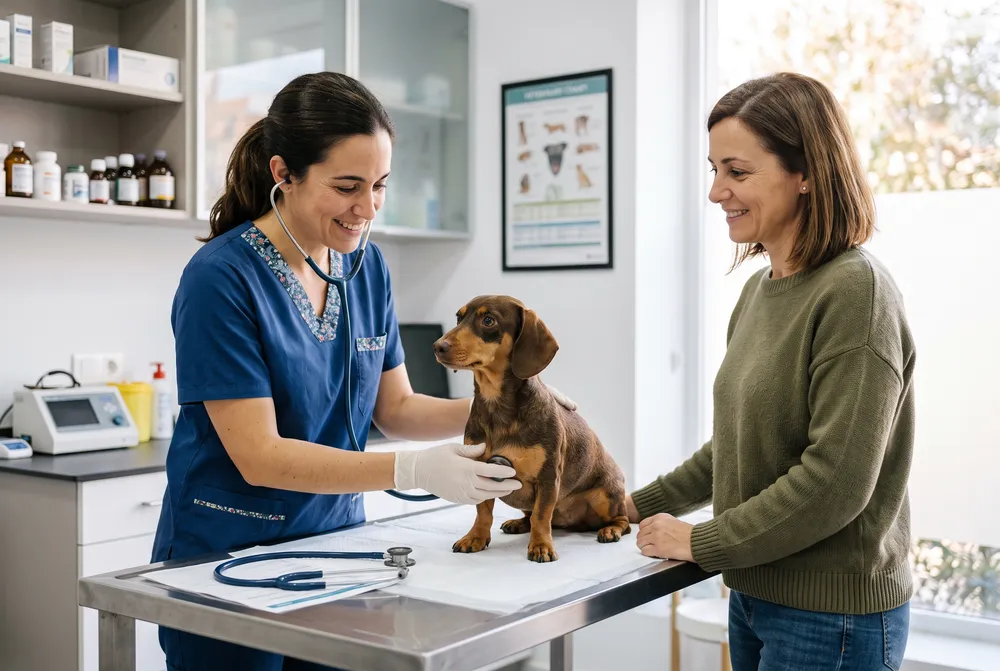
The vet will examine the ear with an otoscope to assess the state of the canal and the eardrum, and may take a sample to look at it under the microscope (cytology). This identifies whether there are bacteria, yeasts or mites and helps choose the most appropriate treatment.
Cleaning and medication
A proper cleaning of the canal, carried out or supervised by the professional, is essential so that the medication reaches its target. After that, ear drops with anti-inflammatories, antibiotics or antifungals are usually prescribed depending on the case. It is important to complete the whole prescribed course, even if the dog seems to improve sooner.
It is best to avoid two common mistakes: inserting cotton buds into the canal, which can push dirt further in or damage the eardrum, and reusing treatments from previous episodes without checking, since not all cases of otitis are treated the same way.
Prevention
Reducing the risk of otitis comes down to a few simple, consistent care habits:
- Check the ears regularly and pay attention to any change in smell, colour or amount of wax.
- Dry the ear well after baths or water exposure, without inserting anything into the canal.
- Clean with a suitable ear product only when your vet recommends it.
- Keep parasite control up to date and manage any underlying allergies.
- In predisposed breeds, discuss a more frequent care routine with the professional.
When to see the vet
At the first signs of discomfort a check-up is worthwhile, but some situations call for prompt attention: intense pain, a marked head tilt, loss of balance, bloody discharge or a rapid worsening. Otitis is very treatable when addressed early; letting it progress is what complicates the picture.
At Clínica Veterinaria Somo, in Somo (Cantabria), we examine your dog's ear, identify the specific cause and propose a treatment plan tailored to its case. If you have any questions or would like an assessment, you can get in touch with us.
Types of otitis by affected area
This table summarises, based on the information above, the three types of otitis according to the area of the ear affected.
| Type of otitis | Affected area |
|---|---|
| External otitis | The visible ear canal; it is the most common |
| Middle otitis | When it extends beyond the eardrum |
| Internal otitis | The deepest; it can affect balance |
Assess each case with your vet; the right treatment depends on each animal's age, weight, health status and history.
Frequently asked questions
Is otitis in dogs contagious?
The inflammation itself is not contagious. However, when it is caused by ear mites, these can pass to other dogs or cats living together, so in those cases it is advisable to check all the animals in the household.
Can I clean my dog's ear at home?
Yes, with an ear cleaner recommended by your vet and following their instructions. What you should not do is insert cotton buds into the canal or use unsuitable products, because they can make things worse or damage the eardrum.
Why does my dog's otitis keep coming back?
Recurrent otitis usually points to an unresolved underlying cause, such as an allergy or an anatomical predisposition. In these cases it is important to investigate and treat that origin, not just the individual episode.
How long does otitis take to clear up?
A mild external otitis usually improves within one to two weeks with the right treatment. Deeper or chronic cases may need more time and follow-up. Completing the course and attending the recommended check-ups helps avoid relapses.