Separation anxiety in dogs is one of the most common behavioural problems seen in consultation and, at the same time, one of the most misunderstood. Many families believe their dog "misbehaves" or "does it out of spite" when, in reality, the dog experiences genuine emotional distress every time it is left home alone. Understanding what is happening to them is the first step towards helping them effectively and improving their wellbeing.
What is separation anxiety?
Separation anxiety is an intense stress response that a dog experiences when separated from the people to whom it is strongly bonded, usually when left alone. It is not a whim or disobedience: the animal experiences being alone as a distressing situation that it does not know how to manage.
The dog is a social species that seeks the company of its group. When that need combines with poor management of being alone, behaviours appear that reveal its suffering. The good news is that, with patience and the right guidelines, most cases improve significantly.
Signs of separation anxiety in dogs
The most typical manifestations appear when the dog is left alone or senses that it is about to be left alone. They commonly concentrate in the first few minutes after the family leaves. These are the most characteristic signs:
Most frequent behaviours
| Sign | What it means |
|---|---|
| Damage around the house (furniture, doors, objects) | Release of tension and anxiety, often near the exits |
| Barking, howling or whining when left alone | An attempt to get attention and bring its group back |
| Inappropriate elimination (urine or faeces) | Loss of control due to the stress state, not "rebellion" |
| Excessive salivation or panting | A physical sign of distress and nervous activation |
| Escape attempts (scratching at doors, windows) | An urgent need to reunite with the family |
It is worth remembering that these behaviours only point to separation anxiety when they appear linked to being alone. If your dog also causes damage or vocalises while accompanied, it may be due to another cause, such as boredom, fear of noises or learning problems. That is why it is so important to observe carefully in which situations it occurs.
Causes of separation anxiety
There is no single cause, but rather a combination of factors. Knowing them helps to understand why a particular dog develops it:
Factors that favour it
An excessive attachment to one person, poor habituation to being alone during the puppy stage, sudden changes in routine (moving house, returning to work, the arrival or loss of a family member) or previous negative experiences are usually behind the problem. A lack of exercise and each dog's predisposition also play a role. Good puppy socialisation and early habituation to being alone greatly reduce the risk.

“Separation anxiety isn't a whim or revenge: it's real suffering, and with patience and help it can improve a great deal.”
How to prevent and manage separation anxiety
The approach combines prevention, modification of the routine and gradual work. These are the most useful guidelines you can apply at home:
Practical guidelines
- If it cannot tolerate being alone: gradual habituation, with very short absences that are lengthened little by little.
- If it gets bored and frustrated: environmental enrichment with interactive toys, chew toys and hidden food.
- If it gets worked up by departures and arrivals: do not dramatise, leave and arrive calmly, without effusive goodbyes or greetings.
- If it builds up energy: enough physical and mental exercise before being left alone.
Gradual habituation to being alone is the foundation of the work: you start with separations of a few seconds, inside the house, and gradually extend the times only when the dog stays calm. Combining it with enrichment (food-dispensing toys, safe chews) helps it associate being alone with something positive.
Just as important is not dramatising departures or arrivals: if we turn every leaving and every return into an emotional event, we reinforce its state of alertness. Finally, a well-exercised dog, both physically and mentally, reaches the moment of being left alone more relaxed. These guidelines share the same logic as those we apply to other stress conditions, such as the symptoms of post-holiday stress or stress in cats.
When to seek professional help
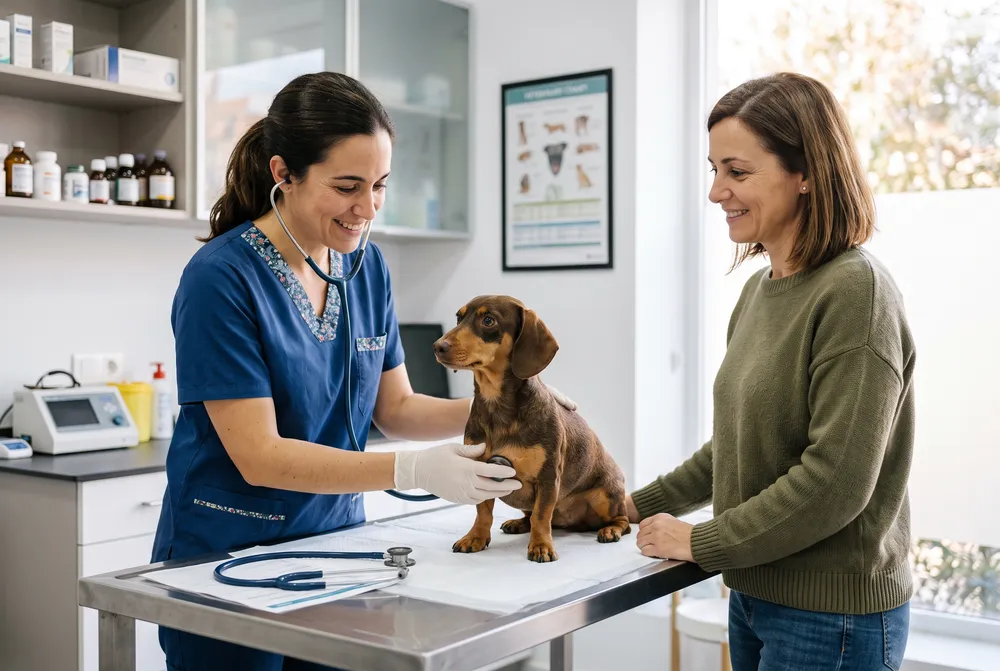
If the signs are intense, persist over time or your dog injures itself in its escape attempts, it is time to consult. The recommended approach is to start with a veterinary visit to rule out physical or pain-related causes that may aggravate the behaviour, since some medical problems influence the emotional state. You can rely on our veterinary internal medicine service for that initial check-up.
From there, working together with a vet and an ethologist or trainer makes it possible to design a behaviour modification plan tailored to your dog. Each case is different, and a professional approach avoids frequent mistakes, such as punishing the animal for behaviours it cannot control. Remember that scolding it after the fact does not work and usually makes the anxiety worse, just as happens when teaching a puppy not to bite: the key lies in prevention and positive reinforcement.
Frequently asked questions
Does separation anxiety have a solution?
In most cases it improves significantly with a consistent behaviour modification plan, patience and, if necessary, the support of a professional. The results depend on the intensity of the problem and on how regularly the guidelines are applied at home.
Does my dog destroy things to take revenge on me?
No. Dogs do not act out of revenge. The damage caused when left alone is a release of anxiety and stress, not a punishment towards the family. Interpreting it that way leads to scolding the dog unfairly and to aggravating the problem.
Does getting another animal solve the anxiety?
Not always. Some dogs calm down with company, but the anxiety bond is usually with people, so bringing in another animal does not guarantee improvement and should never be done as the sole solution. It is best to assess it with a professional.
We can help you at Clínica Veterinaria Somo
If you think your dog suffers from separation anxiety, at Clínica Veterinaria Somo (Cantabria) we can assess its case, rule out medical causes and advise you on the most appropriate guidelines. Contact us or call us on 942 51 00 66 and we will help your dog to be left alone calmly again.