Stress in cats is one of the most frequent and, at the same time, most underestimated problems in feline cohabitation. Unlike dogs, cats show their distress in subtle ways: they don't usually complain loudly, but rather change small habits, hide or stop doing things they used to do normally. That's why many families take a long time to realise that their cat is having a hard time. Spotting the signs early and understanding what causes them is the first step to restoring their calm, both at home and during the trip to the vet.
Why cats get stressed
The cat is a territorial creature of habit. In the wild it is both hunter and prey, so its nervous system is primed to detect any change in the environment as a possible threat. When something disrupts its routine or territory, its body responds with an alert reaction. If that alert is sustained over time, we talk about chronic stress, which can affect their physical and emotional health.
Understanding this highly sensitive nature helps us not to misinterpret their behaviour: a cat that urinates outside the litter box or hides is not "misbehaving", but is very likely asking us for help.
A cat that urinates outside the litter box or hides is not "misbehaving": it is very likely asking us for help.
Signs of stress in cats
The signs of feline stress can be behavioural or physical. It's worth observing your cat closely and seeking advice if you notice several of them or if they persist over time:
Behavioural signs
- Hiding more than usual or withdrawing from the family.
- Urinating or defecating outside the litter box.
- Urine marking on walls or furniture.
- Excessive grooming, which can lead to bald patches.
- Aggression or irritability in response to petting or noises.
- More frequent or intense meowing.
Physical signs
Sustained stress can translate into loss of appetite, vomiting, digestive problems or cystitis. Since many of these signs overlap with those of an illness, it's important to first rule out a medical cause. If you have any doubts, we recommend reading our guide on the signs that your cat is ill and coming in for a consultation.
The most common causes of feline stress
Identifying the source of the distress is key to solving it. These are the causes we see most often and how to address them:
| Cause of stress | How to solve it |
|---|---|
| Changes at home (moving house, new furniture, renovations) | Introduce changes gradually and keep their resting areas and resources in stable locations. |
| Loud noises (storms, fireworks, household appliances) | Offer a quiet, elevated refuge where they can hide; never force them to come out. |
| Cohabitation with other animals or the arrival of a new one | Slow introductions, with separate spaces and resources for each animal. |
| Unsuitable litter box (dirty, small, poorly located or shared) | One litter box per cat plus an extra one, cleaned daily and in quiet areas. |
| Lack of enrichment and boredom | Daily play, scratching posts, elevated areas and toys that stimulate their hunting instinct. |
| Changes in routine or prolonged absences | Keep stable feeding and play schedules to give them predictability. |

“A calm cat is a healthier cat. Looking after their environment and routine prevents many health and behaviour problems.”
Solutions to reduce stress at home
Environmental enrichment
Cats need an environment that allows them to express their natural behaviours: climbing, observing from heights, scratching, hiding and hunting. Provide scratching posts, accessible shelves or ledges, hiding spots and interactive toys. Spending a few minutes a day playing with wand toys or balls noticeably reduces accumulated tension.
Sufficient, well-distributed resources
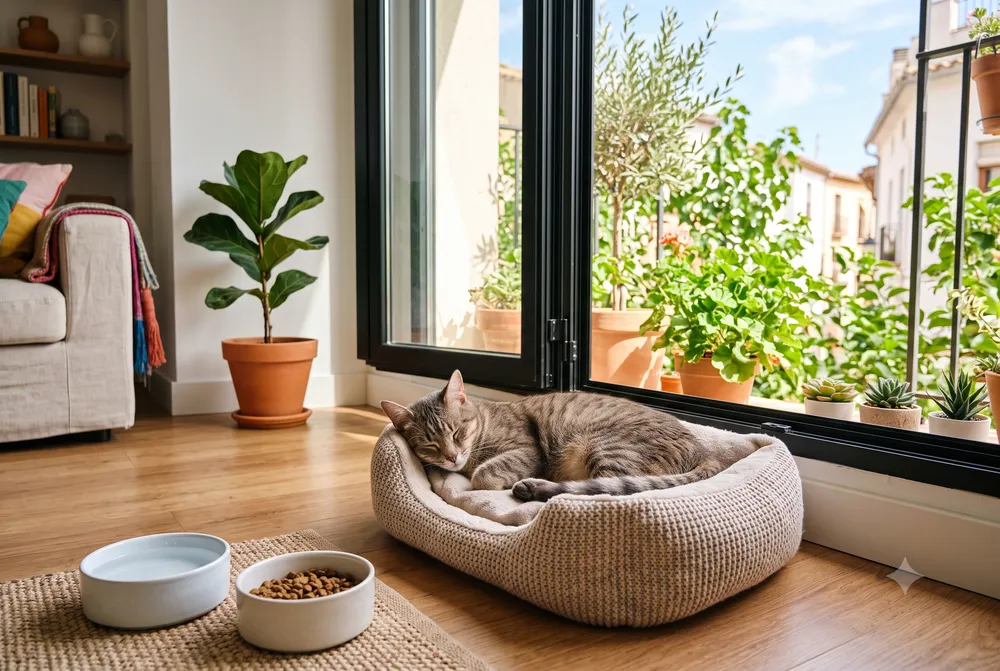
The general rule is to offer one resource per cat plus an additional one: food bowls, water bowls, litter boxes, beds and scratching posts. Spread them around the house to avoid competition and conflict, especially in households with several cats.
Routine and predictability
Cats feel safe when they know what to expect. Keeping stable schedules for food, play and rest gives them a sense of control that reduces anxiety. This principle of routine is just as useful in other species: we see it, for example, in the symptoms of post-holiday stress in dogs.
Feline pheromones
Synthetic facial pheromone diffusers can help convey a sense of security, especially during changes at home or periods of adaptation. They are a complementary aid that should be combined with the measures above.
How to get your cat used to the carrier
For many cats, the carrier is synonymous with a trip to the vet, and that's why they associate it with fear. The key is to turn it into a familiar and pleasant object:
- Always keep the carrier accessible at home, open and with a comfortable blanket inside.
- Place treats or toys inside it to create positive associations.
- Choose a model that opens from the top and can be disassembled: this makes it easier to get in and to explore during the consultation.
- Cover the carrier with a towel during journeys to reduce visual stimuli.
A cat that already sees the carrier as a safe place will arrive at the clinic much calmer.
How to make the vet visit less stressful
The veterinary visit is one of the most stress-inducing moments for a cat, but it can be greatly reduced with preparation and the right approach. At Clínica Veterinaria Somo we have a feline area with "cat friendly" handling and feline specialisation: we work with a calm, unhurried approach, with spaces and timings designed to reduce the cat's stress and low-stress handling techniques that respect their pace.
For your part, you can help by avoiding feeding them just before the trip (to prevent nausea), bringing their health record and a history of their habits, and staying calm, since cats pick up on our nervousness. Keeping their check-ups and your cat's vaccination schedule up to date also helps to space out the necessary visits. And if your cat shows signs that require a more in-depth study, our veterinary internal medicine team can assess the cause in detail.
If you're interested in the emotional wellbeing of pets, you may also find our article on separation anxiety in dogs useful, as it shares many of the same stress-management principles.
Frequently asked questions
Can stress make my cat ill?
Yes. Chronic stress weakens the immune system and is linked to problems such as idiopathic cystitis, digestive disorders or excessive grooming behaviours. That's why it's important not to ignore the signs and to consult a vet.
How long does it take a cat to adapt to a change?
It depends on the individual animal and the change, but it usually ranges from a few days to several weeks. Introducing new things gradually and keeping their routines and resources stable greatly speeds up the adaptation.
Do pheromones work on all cats?
Pheromones are a useful aid in many cases, but they are not a magic solution and don't work the same way in all cats. They give better results when combined with environmental enrichment, sufficient resources and a good routine.
Look after your cat's wellbeing with us
If you notice that your cat is showing signs of stress, don't wait for the problem to get worse. At Clínica Veterinaria Somo we help you identify the cause and design a tailored plan, always with respectful, cat friendly handling. Write to us through our contact page or call us on 942 51 00 66 and book a visit for your cat.